page-header

How e-learning is transforming lives in developing nations

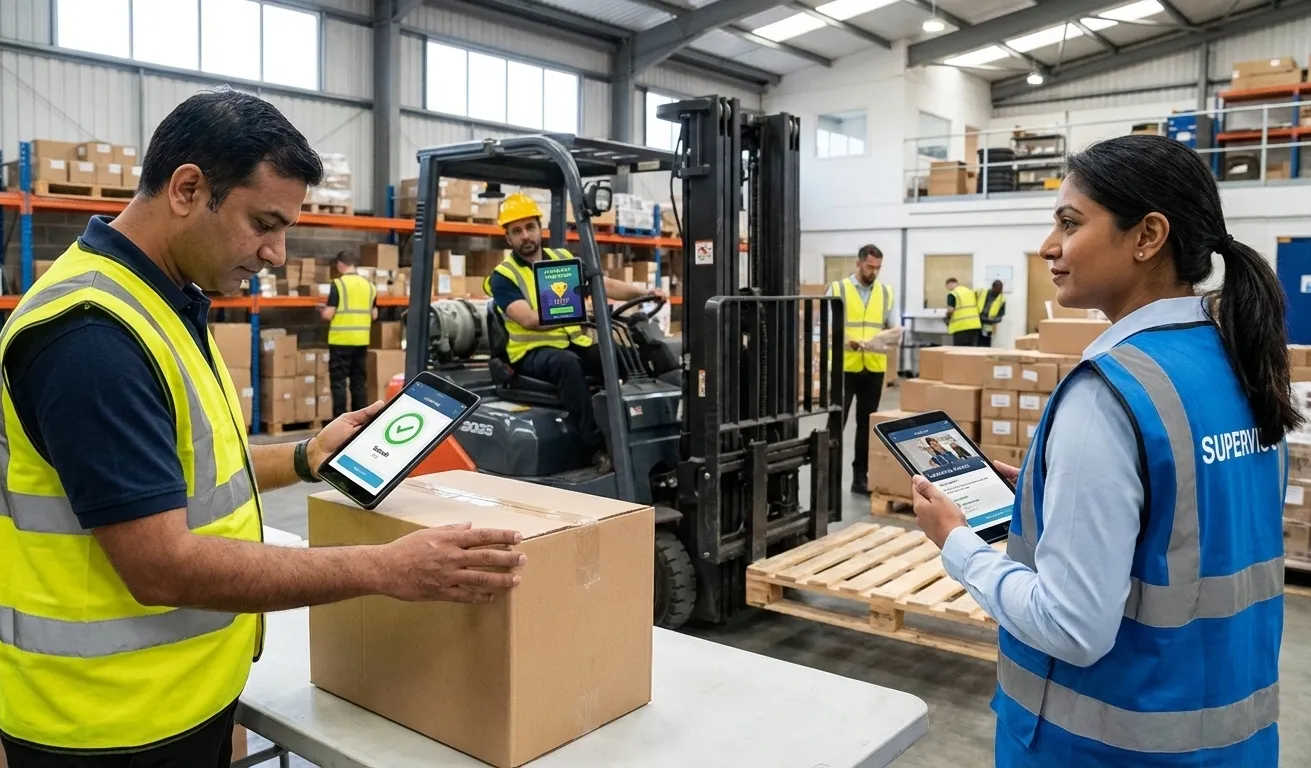
It’s 3 p.m, and we can hear the steady rumble of conveyor belts as packages are readied to be loaded into trucks. The logistics hub runs smoothly, with everyone knowing their place and feeling confident in their work. There’s Subodh, who checks packages for any damages before clearing them for pickup. There’s Qasim, who operates a forklift transporting heavier goods across the warehouse. And, standing to the right, there’s Akanksha: the newly-promoted site supervisor.

These employees were given access to gamified, app-based learning to develop their skillset, feel confident in their roles, and get promoted into leadership positions. Akanksha is one of the first women in her family to hold a steady job, let alone one with progression paths. In this blog, we take a look at how e-learning isn’t just a useful nice-to-have for large businesses, but can be used by foundations and CSR initiatives to drive social mobility in developing nations.

Laying the groundwork

A major reason as to why women like Akanksha were given the opportunity to learn new skills is that an organisation saw potential in getting more women into work. In India, we talk often about the shortage of capable blue-collar workers while simultaneously not providing women with opportunities to get involved.

However, it isn’t as easy as handing female workers a hard hat, and organisations like SEWA Bharat who are empowering self-employed women across India recognise that. They understood that women, having childcare responsibilities, cultural pressures, and more, would be at risk of leaving a job once they hit a hurdle, as they have too much resting on their shoulders already.

SEWA Bharat knew that in order for women to gain access to skilled work and form a lasting career, they would need quality training.

Modern skilling for the modern woman

These women were coming from lower-income households in more conservative areas, where they would face pressure to get married, have children, and stay at home. This meant that they had to feel extremely confident in the skills they were being offered in order to stick with a job.

Similarly, some women already had husbands and children, and would not be able to spend hours every day in a training facility. This is where gamified, app-based learning has come in.

SEWA Bharat brought in 21CC Education to create a three-month programme that taught women about jobs in the logistics sector, as well as additional skills they might need to join jobs in the organisational sector. This curriculum was designed to be approachable, engaging, available in various regional languages, and easy to fit into an already busy life.

Landing the job

145 women took part in the project with 21CC Education and SEWA Bharat in Haryana and West Bengal. As far as everyone was concerned, the initiative would be mutually beneficial: these women would gain access to stable employment, SEWA Bharat would see more women gainfully employed, and businesses struggling to meet staffing requirements would finally have the necessary skilled manpower.

However, there were still anxieties over how successful the project would be in reality. Would the female workers be welcomed by their male counterparts? Would they feel too much pressure to stay home and pick up gig work? Would the training prove sufficient to not only get them through the door, but help them grow a stable career?

Unsurprisingly, these incredibly capable women have thrived in their new career paths, with 18 of the original participants now promoted into team leaders or supervisors. The skills they received equipped them with the training to handle heavy machinery, sort products, and lead teams, but it also gave them the confidence to know and trust that the work they were doing held value.

Creating a change

Reports from KPMG, McKinsey, and Goldman Sachs all point to a steep drop-off between women in entry-level roles and leadership positions. 21CC Education and Sewa Bharat were able to work with women who had never held a role in logistics and, just under two years later, some of those women have already been promoted.

This goes to show the incredible impact of meeting women where they are, working with and for them, and building their confidence from the ground up so that they can hold their own in male-dominated industries.

This blueprint can be — and ought to be — reused across the country and other developing nations, giving women the opportunity for true, self-driven social mobility.

If you’re a foundation or CSR leader looking to create employment opportunities in developing nations, get in touch today to learn more about how 21CC Education can support you.
Back to top of page